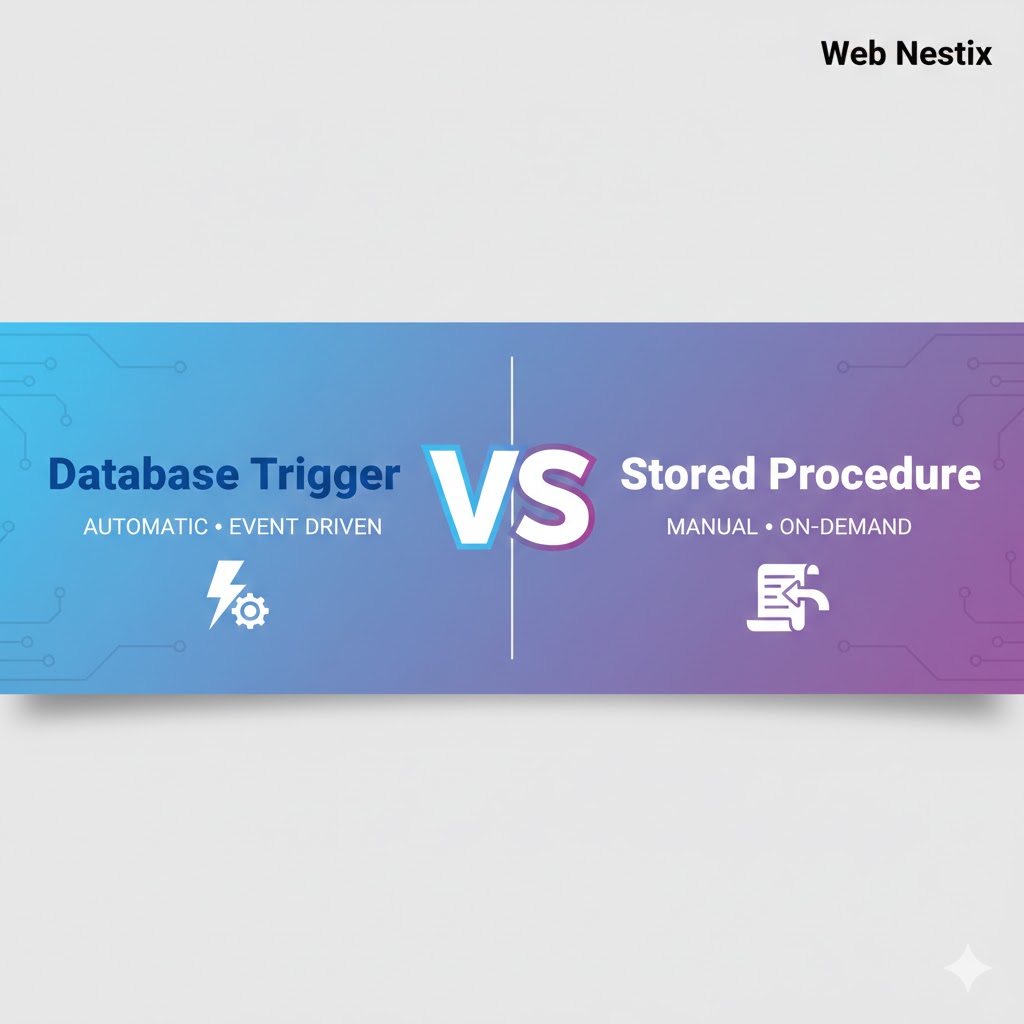
Trigger vs. Stored Procedure
Published: February 15, 2026 | Updated: March 23, 2026
Introduction When building a robust database, one of the most common debates developers face is where to put their logic: inside a Trigger or a Stored Procedure? While both live within the database, they serve very different purposes. Choosing the wrong one can lead to "hidden" bugs or slow performance.
What is a Stored Procedure? A Stored Procedure is a prepared SQL code that you can save and reuse. Think of it like a function in programming; you "call" it manually when you need it to run.
Best for: Complex business logic, batch processing, and tasks that require user input.
What is a Trigger? A Trigger is a special type of stored procedure that runs automatically when an event happens in the database, such as an INSERT, UPDATE, or DELETE. You don't call a trigger; the database "fires" it for you.
Best for: Auditing, enforcing data integrity, and automatic logging.
Key Differences at a Glance
Execution: Procedures are manual; Triggers are automatic.
Parameters: Procedures can take inputs; Triggers cannot.
Visibility: Procedures are easy to track; Triggers are "invisible" and can be harder to debug.
Transaction: Triggers run inside the same transaction as the data change, meaning if the trigger fails, the data change fails too.
The Verdict: Which should you use? If you need to perform a task because a user clicked a button, use a Stored Procedure. If you need to ensure that every time a row is deleted, a record is kept in a "History" table, use a Trigger.